










Need to know
- In 2025, Momentum Life Insurance paid R90 million in claims for prostate and testicular cancer across all benefit types.
- Cancer was the leading cause of critical illness claims among Momentum Life Insurance's male clients in 2025, accounting for 36% of these claims.
- Early prostate cancer often has no symptoms at all. Speak to your doctor about your personal risk and appropriate screening.
I'm in my 50s, which means I've reached the age where my reading glasses are always in the other room, my knees forecast the weather, and conversations with my doctor now begin with "At your age...". It's also the age when Movember stops being a fun excuse to grow questionable facial hair and becomes something far more personal.
Behind every breast cancer statistic is a woman with Because here's the thing about men like me: we'll happily spend a weekend researching the perfect braai tongs, but ask us to book a medical check-up, and suddenly we're too busy until 2031.
In my day job, I see how important financial protection can be when serious illness strikes. In 2025, Momentum Life Insurance paid R90 million in claims for prostate and testicular cancer across all benefit types.
But the figure that really caught my attention was the way the money was paid: R74 million in critical illness claims and R15 million in death claims.
Most of that money was paid under benefits designed to support men living with cancer. It highlights an important financial reality: a cancer diagnosis can bring costs during treatment and recovery, including medical expenses and time away from work.
Cancer remains the leading cause of critical illness claims among our male clients, accounting for 36% of these claims in 2025. Prostate cancer alone made up 11.4% of all male critical illness claims.
And then there's the statistic that made me sit up a little straighter in my chair. Among men aged 60 and over, prostate and testicular cancers accounted for 46% of cancer claims. Sixty is not that far off for me, and it may not be for you either.
Does a family history increase your risk of breast cancer?
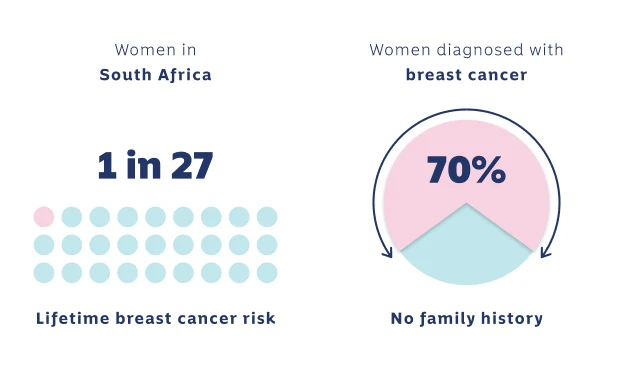
Family history is an important risk factor, but it's not the whole story. According to Dr Jacqueline Kieck, quoted by Mediclinic Southern Africa, 70% of women diagnosed with breast cancer have no family history of the disease. That's why it's important for all women to be aware of their breast health and discuss an appropriate mammogram screening with their doctor.
When should women start having mammograms?
Breast cancer often does not come with obvious warning signs in its early stages, making routine screening an important tool for early detection.
According to CANSA's breast cancer guidelines, women should have annual mammograms from age 40. From age 55, they can switch to every 2-year mammograms or continue annual screening.
Why does early detection matter?
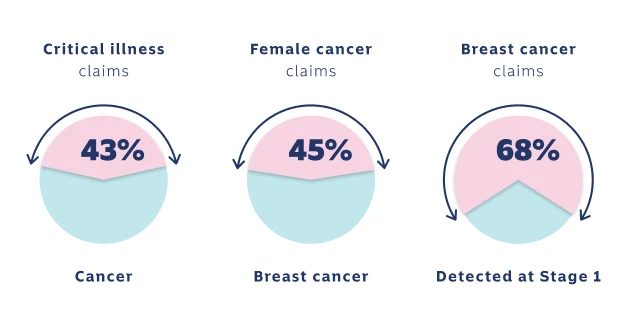
Momentum Life Insurance's 2025 claims data shows that 68% of its breast cancer claims were detected at Stage 1. Early detection can improve treatment outcomes and may reduce the need for more aggressive treatment.
The statistics women shouldn't ignore
According to Momentum Life Insurance's 2025 claims data, breast cancer was the leading cause of female critical illness claims. It accounted for 45% of female cancer claims, and the youngest breast cancer claimant was just 30 years old. Cancer accounted for 43% of all critical illness claims at Momentum Life Insurance, while critical illness payouts increased by more than 15% year-on-year, exceeding R1 billion for the first time.
Preparing for more than treatment
A breast cancer diagnosis can affect much more than medical bills. Treatment and recovery may mean taking time off work, reducing working hours or stepping back from running a business. That's why financial preparedness matters alongside regular screening and healthy lifestyle choices.
While medical aid and gap cover may help with certain healthcare expenses, critical illness cover can provide a lump sum payment if you meet the relevant claim criteria. This money can help with household expenses, debt or other financial needs during treatment and recovery. A financial adviser can help you assess your existing protection and identify potential gaps.

Don't wait for a wake-up call
Breast Cancer Awareness Month is ultimately about taking action, not expecting the worst. Whether that's scheduling a mammogram, performing regular self-checks, learning more about your risk factors through CANSAor speaking to a healthcare professional, small steps today can make a meaningful difference tomorrow.
Get a critical illness quote
Breast cancer can affect more than your health. It can impact your income, savings and financial plans too.
To understand how critical illness cover could help reduce the financial impact of a serious diagnosis, get a Momentum critical illness quote from Momentum Life Insurance. Or chat to your financial adviser about the protection that is right for you, so you can focus on recovery when it matters most.
Momentum is part of Momentum Metropolitan Life Limited, an authorised financial services and registered credit provider. Terms and Conditions apply.

ABOUT THE AUTHOR
Joretha Bothma
HEAD OF PRODUCT DEVELOPMENT, UNDERWRITING AND CLAIMS AT MOMENTUM LIFE INSURANCE
Joretha Bothma holds an honours degree in commerce from the University of Pretoria and qualified as an actuary in 2009. She joined Momentum Life Insurance in 2017 and currently heads up Product Development, Underwriting and Claims. At Momentum Life Insurance she drives digital onboarding and underwriting initiatives, overseeing product support, claims, reinsurance and service teams.
Share this

@MomentumZA

@Momentum_za

Momentum_2

@momentumza

momentumgrouptv