










Need to know
- Saving is more than a financial habit, it’s an act of self-respect that builds resilience, independence, and long-term wellbeing in an uncertain world.
- In South Africa’s low-savings reality, consistent saving (even small amounts) and investing early are key to creating stability, emergency protection, and long-term wealth through compounding.
- Therèse Havenga of Momentum Savings highlights that intentional saving and expert advice create lasting financial lasting security.
Saving is often positioned as a financial discipline or a practical necessity, but it is also something much deeper - an expression of self-respect and long-term care.
Every time you choose to save instead of spend, you are making a quiet declaration that your future matters. You are prioritising stability over impulse, freedom over instant gratification, and long-term wellbeing over short-term reward.
In a world where financial pressure is constant and uncertainty is normal, saving becomes more than a habit. It becomes a way of building resilience, identity, and independence.
The psychology behind saving: choosing your future self
Psychologists often remind us that the ability to delay gratification is one of the strongest predictors of long-term success and happiness. Saving money is exactly that: choosing future joy over instant indulgence.
Every time you put money aside, you’re telling yourself: “I matter. My tomorrow matters.”
It’s not just about numbers in an account; it’s about identity, confidence, and self-respect. For singles, this reframing is powerful. It transforms saving from a financial chore into a statement of resilience – proof that long-term security is cultivated within and not provided by someone else. That’s why even couples can revisit how they think about money.
How saving strengthens everyday stability and resilience
While long-term investments are vital, short-term resilience is what helps you navigate daily life. Life has a way of throwing curveballs – whether it’s a job loss, a medical bill, or an unexpected expense – and that’s why having a safety net is so powerful.
This is where an emergency fund becomes your shield ensuring that setbacks do not derail long-term goals.
. By saving at least three months of living expenses, you gain:
- Peace of mind: The ability to sleep better knowing you have a safety net.
- Confidence: The freedom to walk away from toxic situations.
- Security: A buffer caused by financial stress.
How small, consistent savings build long-term wealth
A common misconception is that saving only matters when large amounts are involved. Choosing to start early – even with R500 a month – is what creates momentum. It’s not just a financial habit, but a radical act of independence that can compound into wealth over time when invested consistently.
This is where compound interest becomes powerful. It acts as the quiet partner that never ghosts you, turning small gestures into lifelong security.
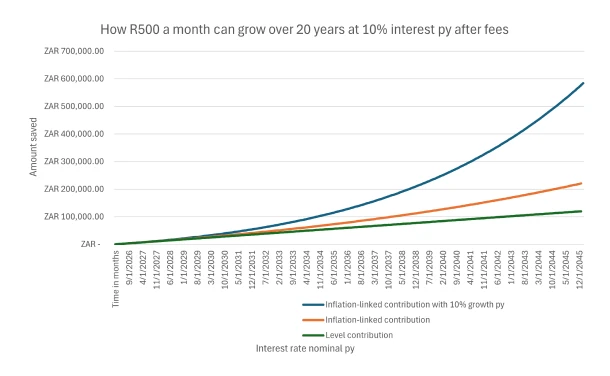
Here’s how: Consider the difference between simply “stashing” money and actually investing it over 20 years.
The numbers on the graph confirm your choice:
- The green line shows how minimal savings without interest are, merely putting R500 in a suitcase every month, so to speak. It won’t keep up with inflation and lose value over the 20 years: You won’t be able to buy with it what you can buy with it today.
- The orange line shows it is marginally better to at least increase your monthly contribution to stay on par with inflation (in this case 6%).
- The blue line shows the magic of actual growth, of 10% per year after fees – that’s when money takes flight. It makes sense to invest and stay invested.
How to turn financial planning into a self-care ritual
Saving becomes more powerful when it’s part of intentional financial planning rather than an occasional task. Instead of seeing it as technical or restrictive, create a simple routine that supports both your goals and wellbeing.
Once a month, have a "Financial check-in". Check in on your savings, tweak your goals, and give yourself credit for staying consistent.
In a country where most struggle to save, choosing to invest in yourself is a revolutionary act of self-care. You don't need to wait for a special occasion to start. By planting financial seeds today, you are ensuring that your future self has the freedom, dignity, and joy they deserve. The greatest investment you will ever make is the one you make in yourself.
This blog post was adapted from an article seen on iol.co.za.
Get advice
With savings plans from Momentum Savings, you can take control of your financial journey with greater clarity and consistency - transforming everyday saving into a sustainable act of self-care. Speak to a financial adviser for guidance on ways to make our savings plans work for your financial future.
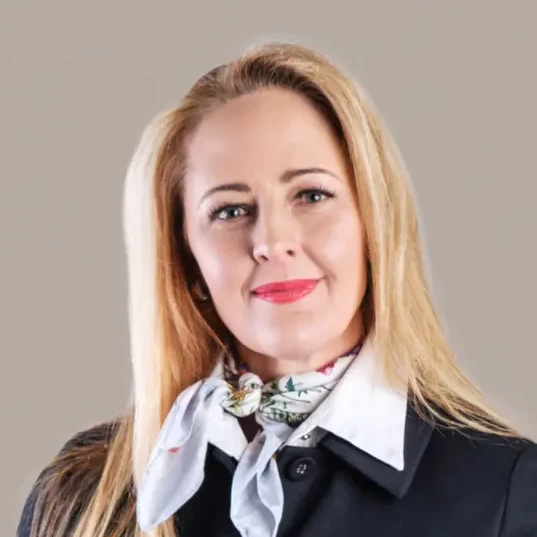
Therèse Havenga
Head of Business Transformation at Momentum Savings
Therèse has over 20 years’ experience in financial services, spanning consumer insights, neuroscience, strategy, client experience, innovation and digital transformation. She holds a Master’s in Research Psychology and certifications in change management, product ownership, customer experience, coaching, and digital transformation. She is passionate about people-centred design, guiding transformation, and creating meaningful, insight-led impact.
Share this

@MomentumZA

@Momentum_za

Momentum_2

@momentumza

momentumgrouptv